
The conversation around sustainable industrial development often begins with technologies, solar panels, heat pumps, water recycling.
Yet before a single pipe is laid or steel beam lifted, there’s a foundational decision that echoes across decades: site selection.
Where a factory is located influences everything; from logistics emissions and energy use, to social equity, biodiversity, and long-term adaptability.
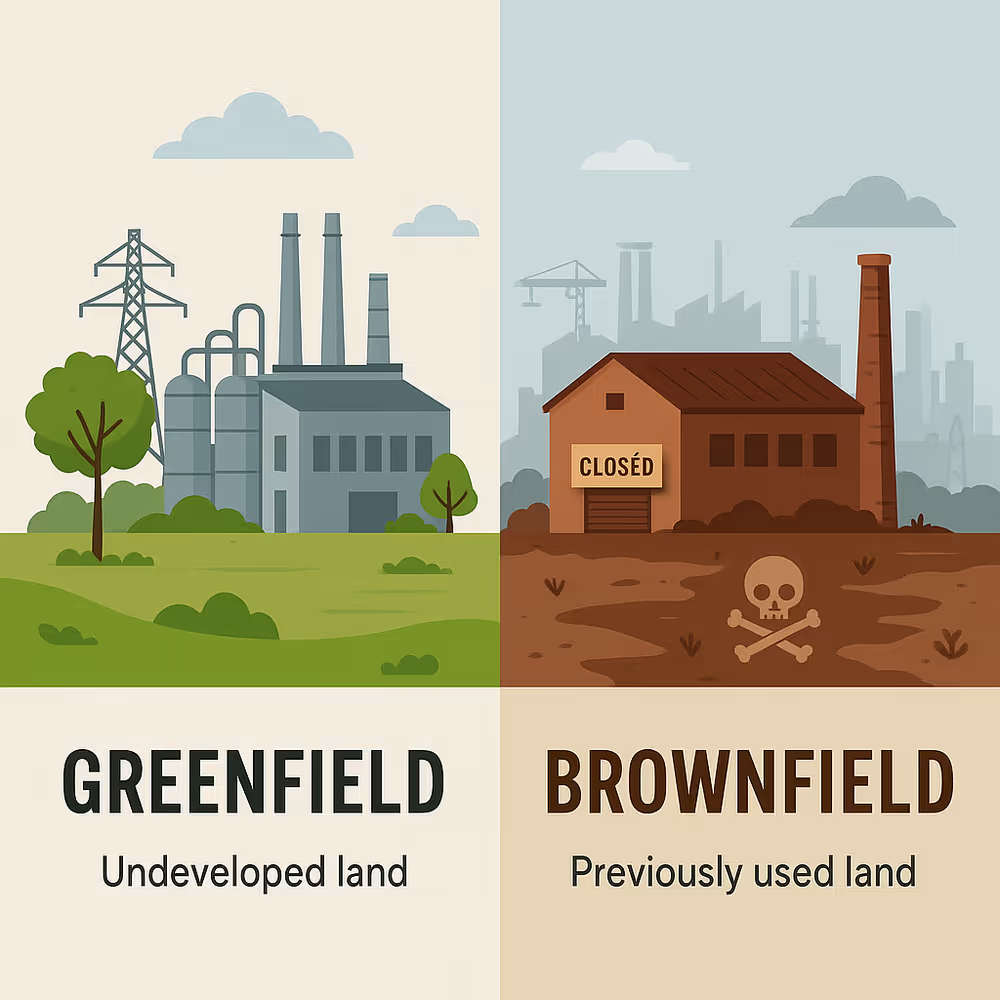
The choice between a greenfield site (undeveloped land) and a brownfield site (previously used, possibly contaminated land) is more than a technical exercise.
It is an act of climate citizenship and place-based responsibility.
In this article, we unpack a robust site-selection matrix, explore the emerging renaissance in brownfield regeneration, analyze four compelling case studies, and connect this decision to key Sustainable Development Goals (SDGs) and cultural worldviews such as Ubuntu, Degrowth, Buen Vivir, and Amanah.
Our goal: to elevate site strategy from a one-off logistics decision into a core pillar of regenerative industrial design.
The Site-Selection Matrix (Logistics • Energy • Ecology • Equity • Incentives)
Selecting the right site means balancing cost, compliance, and context.
Below is a high-level matrix to evaluate options through a sustainability lens:
| Criteria | Greenfield Site | Brownfield Site |
|---|---|---|
| 🛣 Logistics & Access | Often peripheral, may require new transport infrastructure. | Typically urban or peri-urban with legacy rail, road, or water access. |
| ⚡ Grid Mix & Energy Potential | Space for renewables but may require grid extensions. | Closer to substations, more feasible for demand-side management. |
| 🌾 Ecological Impact | Risk of deforestation, habitat loss, and soil sealing. | Often ecologically degraded, opportunities for biodiversity enhancement. |
| 🏘️ Community Impact & Equity | Can trigger displacement or gentrification. | Can catalyze local jobs, healing of environmental injustices. |
| ♻️ Circular Economy Potential | Risk of linear design mindset. | Forces creativity through constraints—modular retrofits, material reuse. |
| 💰 Financial Incentives | Sometimes fewer, especially in urban zones. | Often eligible for tax credits, remediation subsidies, and fast-track permitting. |
The decision isn't binary.
Increasingly, hybrid models—comprising greenfield-brownfield blends or land swaps with municipalities—are emerging, especially in urban-industrial corridors that seek to densify and decarbonize simultaneously.
The Brownfield Renaissance: From Liability to Legacy
Once viewed as risky or toxic assets, brownfield sites are staging a comeback, driven by ESG imperatives, public funding, and a cultural shift toward regenerative development.
🌍 Why Brownfield Makes Climate and Business Sense
Remediation Tech Is Maturing
Innovations such as phytoremediation (where plants absorb contaminants), permeable bio-barriers, and low-temperature thermal desorption are making even complex sites viable.
Incentives and Fast-Track Permitting
Many governments offer incentives for brownfield redevelopment, including accelerated depreciation, remediation grants, and streamlined permitting pathways.
Infrastructure You Don’t Have to Build
Old industrial sites often come with legacy transport, sewer, or grid connections, which can significantly reduce upfront CAPEX.
Community Trust and Reputation
Turning a derelict eyesore into a community asset embodies Amanah (stewardship), Ubuntu (collective well-being), and builds powerful goodwill with both regulators and locals.
Case Studies: Lessons from Real Projects
🚘 Tesla Gigafactory Berlin — Greenfield Tradeoffs
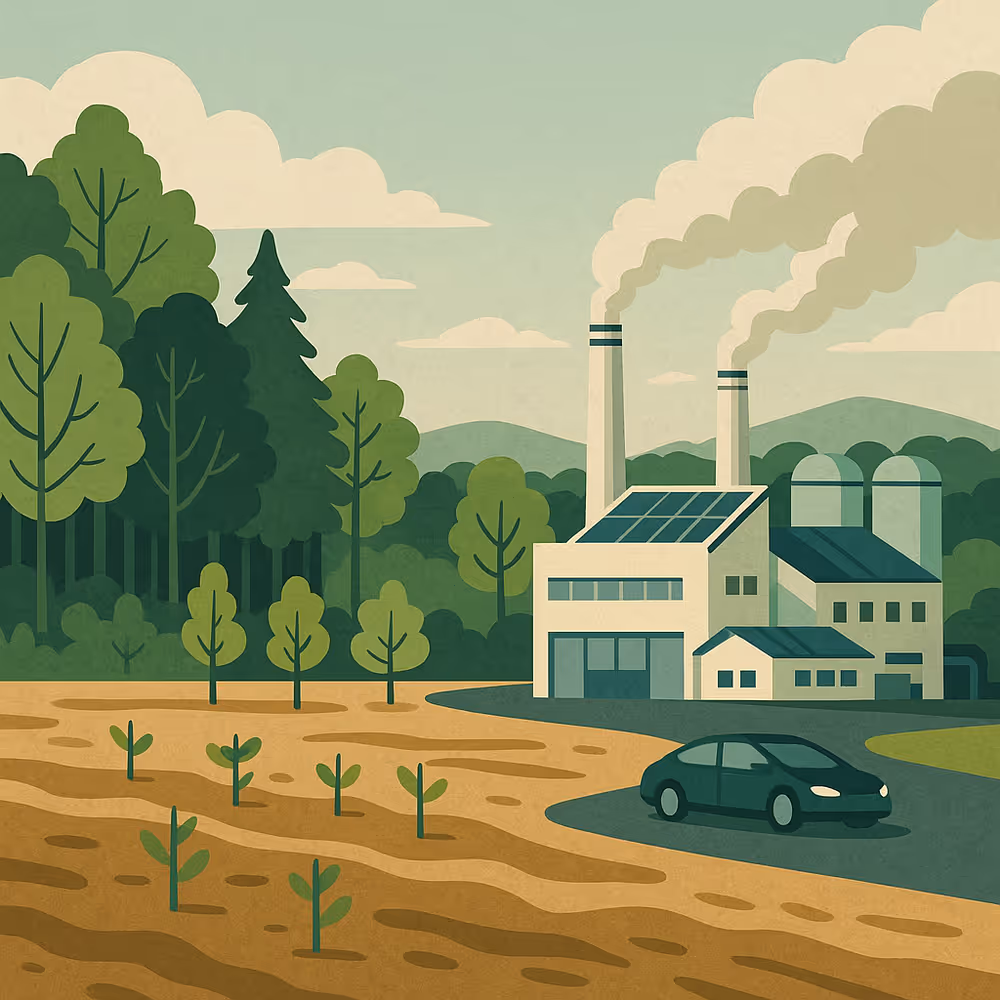
Type: Greenfield
Details: Tesla’s decision to build on a forested greenfield outside Berlin drew swift criticism due to tree clearance and water table disruption. Despite environmental offsets and high energy efficiency, the site choice ignited tensions with environmental groups and local residents.
Lesson: High-tech design can’t compensate for poor site optics; social licence matters.
🏙️ London Royal Docks — Urban Brownfield Regeneration
Type: Brownfield
Details: This former shipping and industrial hub is being transformed into a mixed-use sustainable district, blending logistics, green manufacturing, housing, and mobility.
Features: Green roofs, integrated energy grids, hydrogen trials, and wetlands restoration.
Lesson: Brownfield repurposing can elevate urban resilience and democratise sustainability through public-private-community partnerships.
🧪 Pfizer Pearl River — Retrofit for Circular Operations
Type: Brownfield
Details: Pfizer transformed a century-old research facility into a next-gen biomanufacturing site.
Features: Modular cleanroom systems, greywater reuse, smart energy dashboards
Lesson: Heritage can be leveraged, not erased, for circular innovation and carbon reduction.
🔧Tata Steel (Jamshedpur) — Hybrid Industrial Symbiosis
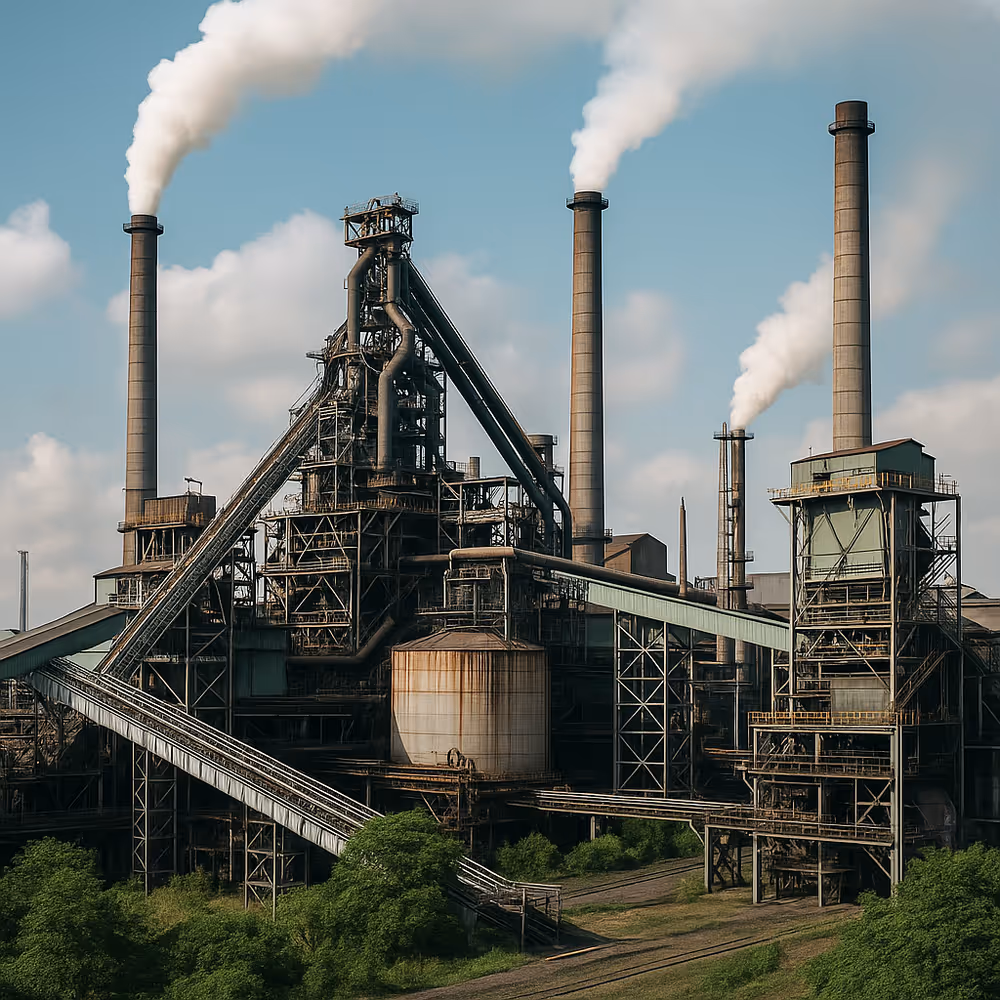
Type: Hybrid (Brownfield extension)
Details: This plant’s expansion was designed around zero-waste ambitions, with waste heat and by-products fed to nearby facilities producing cement and chemicals.
Cultural Tie-In: Reflects Eco-Swaraj—self-sufficient ecosystems rooted in local control and balance.
Lesson: Brownfield doesn’t mean “small.” Scalable industrial ecosystems can emerge from smart expansion strategies.
Culture as a Compass for Site Strategy

Site selection, when viewed through a values lens, offers deeper insight:
- Ubuntu (South Africa): Choose sites that uplift—not displace—local communities. Ensure factories serve as catalysts for shared growth.
- Buen Vivir (Andes region): Protect ecological harmony by regenerating landscapes, not exploiting them.
- Degrowth (Europe): Prioritize reusing existing space over land-hungry expansion. Build only what’s needed.
- Amanah (Islamic governance): Uphold trust in managing Earth’s resources—brownfield reuse is a form of repair.
- Gross National Happiness (Bhutan): Consider the mental, social, and ecological well-being of workers and neighbours.
- Eco-Swaraj (India): Opt for sites that enable local autonomy in water, energy, and resource management.
- Collective Mindfulness (East Asia): Acknowledge the invisible interconnections—air, noise, transport, biodiversity—before breaking ground.
- Regenerative Culture (Global): Ask not only “how do we minimise harm?” but “how can the site become a net positive force?”
These philosophies anchor the site-selection process in purpose, not just profit, ensuring that decisions reflect both climate reality and cultural responsibility.
Conclusion: From Plot to Planet—Pick With Purpose
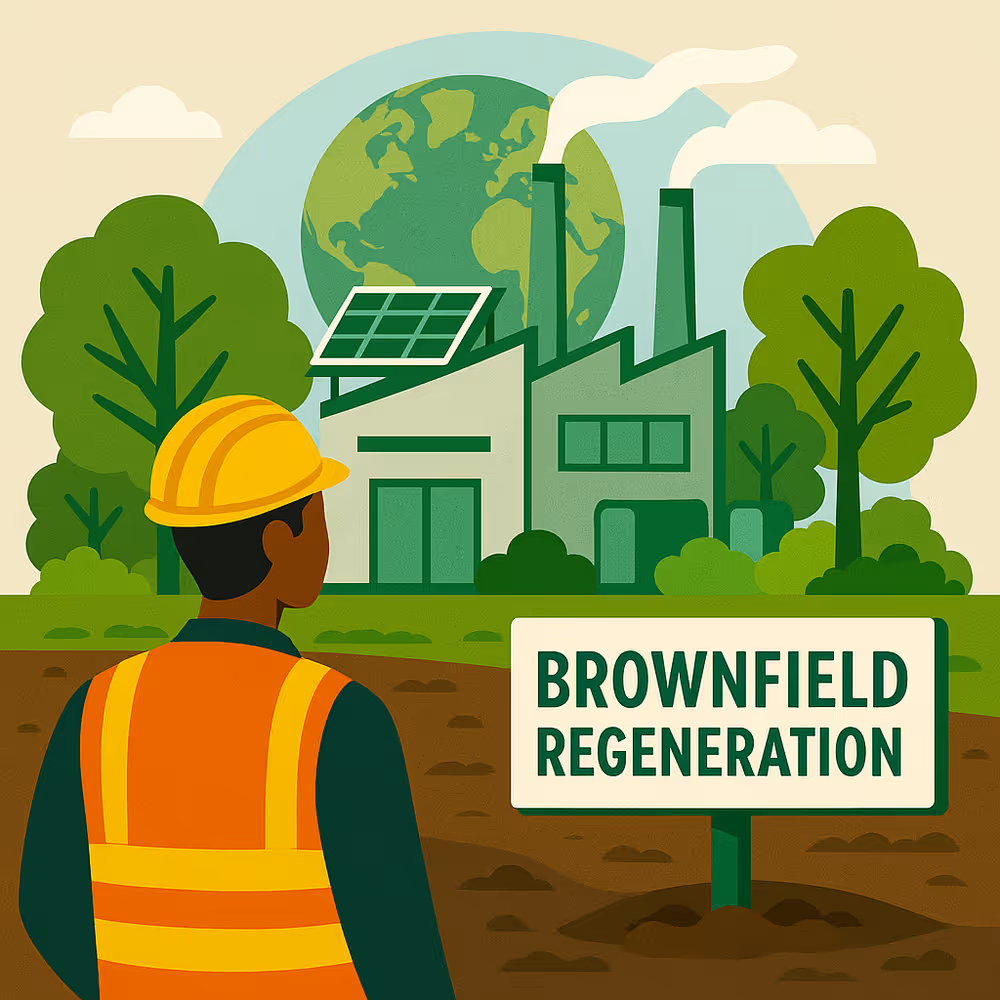
In a climate-constrained, socially conscious era, where you build your factory is a moral, strategic, and ecological decision.
The myth that greenfield projects are always cheaper is collapsing under the weight of real-world costs—reputational, logistical, and environmental.
Brownfield regeneration offers a compelling alternative:
- ✅ It reduces land-use pressure and avoids ecological destruction.
- ✅ It helps mend urban scars, redistribute opportunities, and fulfill the promise of a just transition.
- ✅ And it challenges us to be creative within constraints, the essence of design thinking and regenerative industry.
💡 Call to Action: Pick With Purpose
As you plan your next industrial project:
- Executives & Real Estate Teams: Develop a Sustainable Site Selection Scorecard that incorporates grid intensity, social licence, water risk, and circularity potential, not just cost per acre.
- Urban Planners & Policy-Makers: Expand incentive portfolios for brownfield retrofits and adaptive reuse.
- Designers & Engineers: Rethink layouts to fit existing site conditions, not the other way around.
- Investors & Developers:Prioritize projects that regenerate. Don’t just occupy space.
Every industrial project starts with a piece of land. What we do with it; preserve it, revive it, or exploit it, will define our impact for generations. Choose wisely, Let the land remember you kindly. 🌱
0 Comments
Leave a comment