
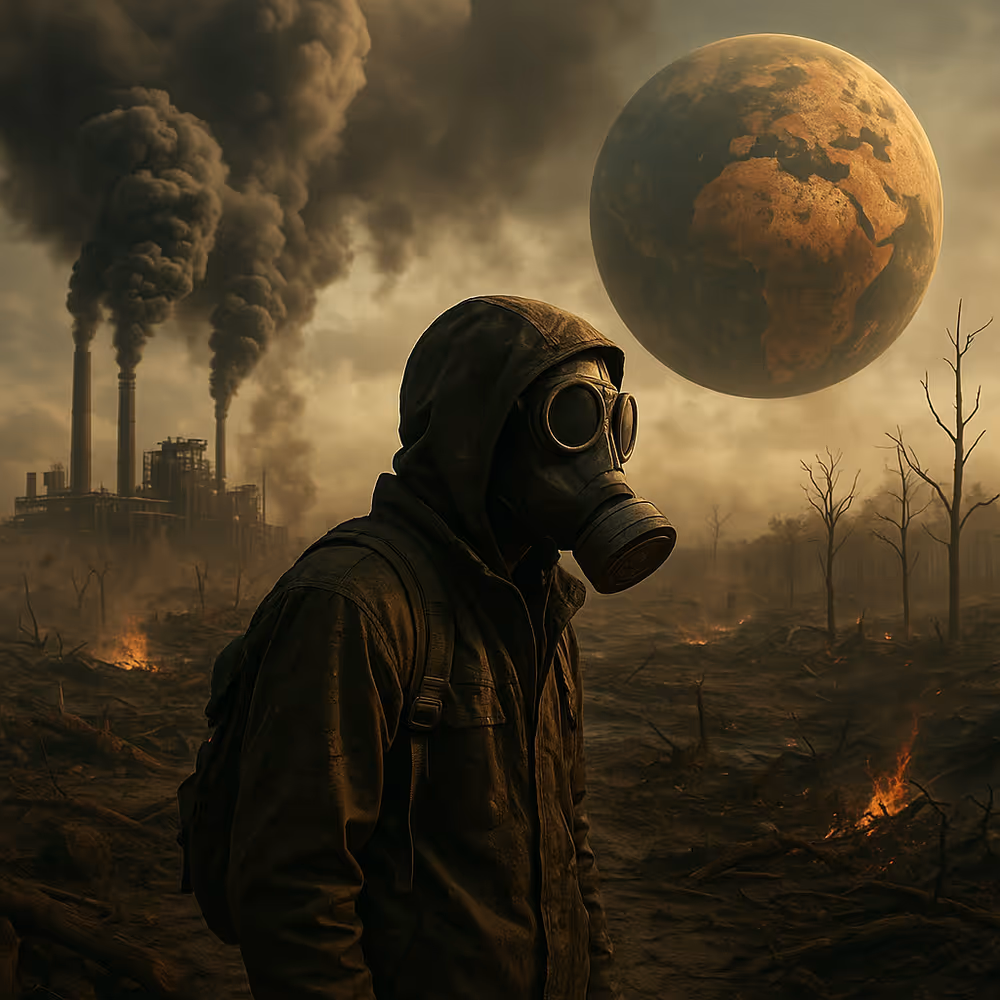
For all our intelligence, our technological marvels, and our grand cities, humanity forgets a simple truth: we are biological beings on a biological planet.
The health of our soils, forests, oceans, and atmosphere is the health of our lungs, our food systems, and our minds.
If planetary health collapses, public health collapses. Full stop.
We often talk about climate change as an abstract “environmental” problem.
It is not.
It is a public health emergency.
Our future is tied to the survival of ecosystems that quietly labor every second; cycling oxygen, purifying water, stabilizing climate, feeding billions. If they fail, so do we.
🌊 Section 1: The Invisible Life-Support System

Oceans, forests, soils, and ice: how they stabilize climate
Oceans absorb 90% of excess heat and produce over half the oxygen we breathe.
But warming seas and acidification are bleaching coral reefs—the nurseries of marine life—and collapsing fisheries that feed 3.2 billion people.
Forests are not just timber; they are respiratory systems for Earth.
Amazon deforestation already threatens rainfall cycles as far away as Africa and North America.
Soils host more microorganisms than stars in the galaxy, locking away carbon and nurturing crops.
Industrial farming has degraded nearly a third of arable land.
Icecaps are planetary thermostats.
Their melt destabilizes coastlines, and with them, cities and nations.
Destroy these, and we strip away the immune system of civilization.
🌡️ Section 2: Public Health Risks in a Warming World
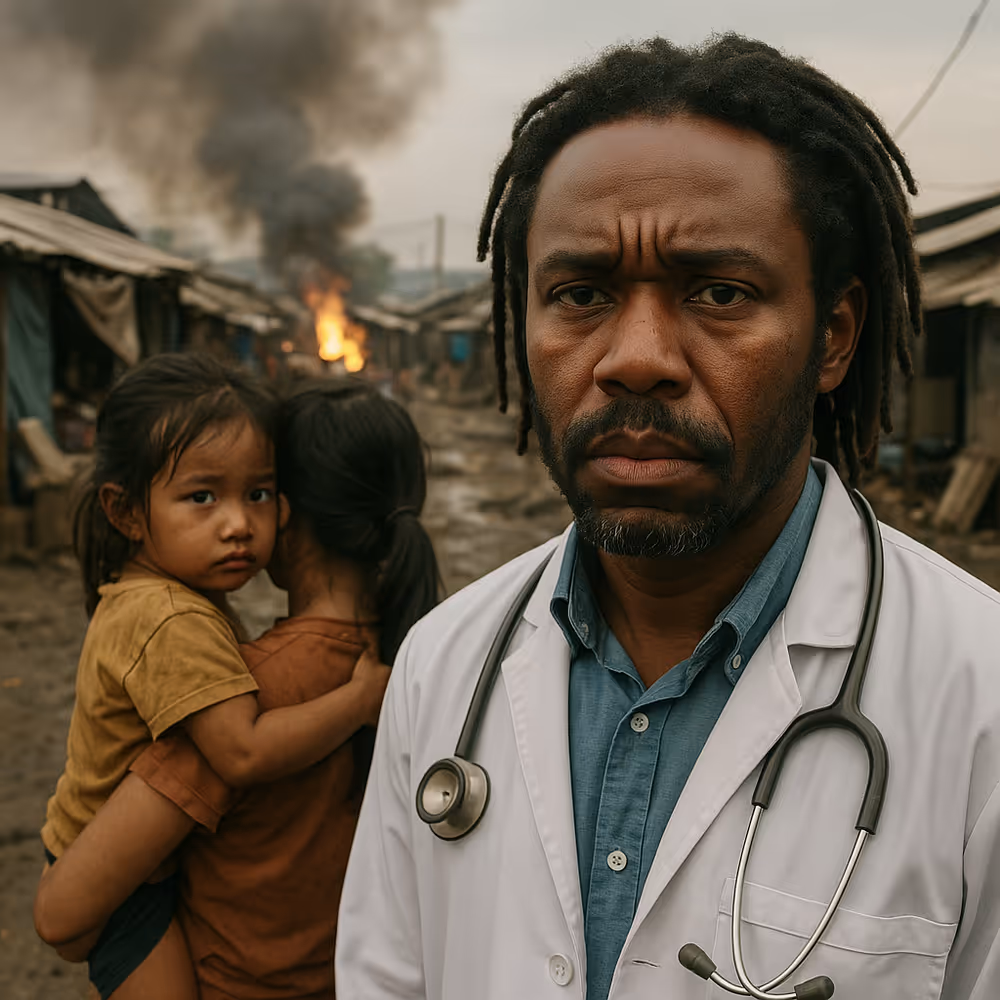
When ecosystems collapse, disease rises:
- 🦟 Vector-borne diseases like malaria and dengue expand into new territories as temperatures climb.
- 🌾 Food insecurity follows crop failures and soil depletion, leading to malnutrition and stunting in children.
- 💨 Respiratory illness explodes as air pollution and wildfire smoke spread.
- 💧 Water-borne diseases surge when floods overwhelm fragile sanitation systems.
It isn’t a distant scenario.
It’s already happening in Mombasa, Jakarta, New Orleans, and beyond.
💣 Section 3: A Dinosaurs’ Lesson
Sixty-six million years ago, a cataclysmic asteroid ended the age of the dinosaurs.
Today, the asteroid is us.
Through unchecked carbon emissions, we are accelerating the Earth system toward thresholds that could make it hostile to life as we know it.
Imagine famine at scale, refugee crises across continents, and heat zones where humans cannot survive outdoors.
This is not alarmism; it is physics, chemistry, and biology converging.
🌱 Section 4: The Good News—We Hold the Pen
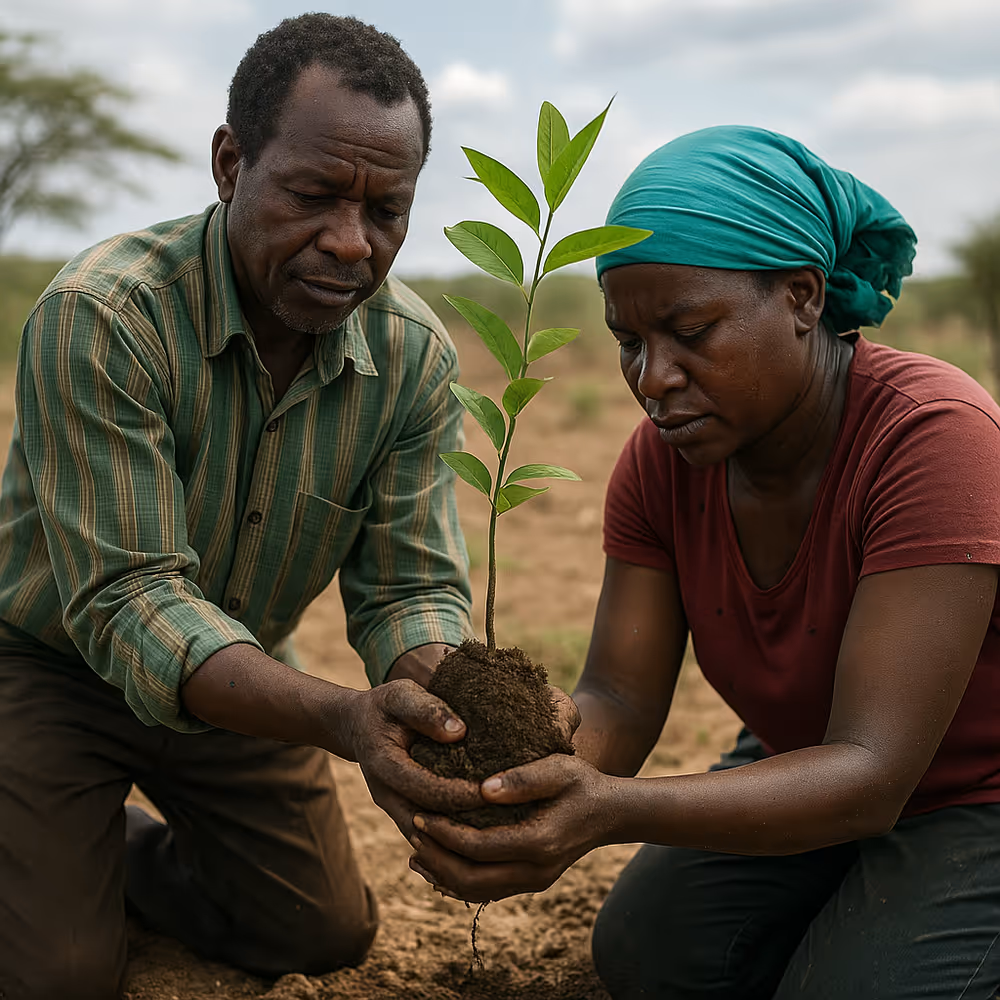
Despite the horror story, we still have a chance to rewrite the ending.
Across the world:
- 🌳 Reforestation projects like AFR100 are restoring African landscapes, binding communities to climate resilience.
- 🌊 Mangrove rewilding in Mombasa and Indonesia is absorbing carbon, buffering floods, and sustaining fisheries.
- 🔋 Renewable revolutions in Kenya (geothermal), Morocco (solar), and Denmark (wind) are proving economies don’t collapse when fossil fuels shrink—they thrive.
- 🧠 Indigenous knowledge systems—like rotational farming, seed diversity, and sacred forest protection—show that sustainability wasn’t invented in Davos; it has been practiced for millennia.
🤖 Section 5: Tech as a Tool, Not a Savior
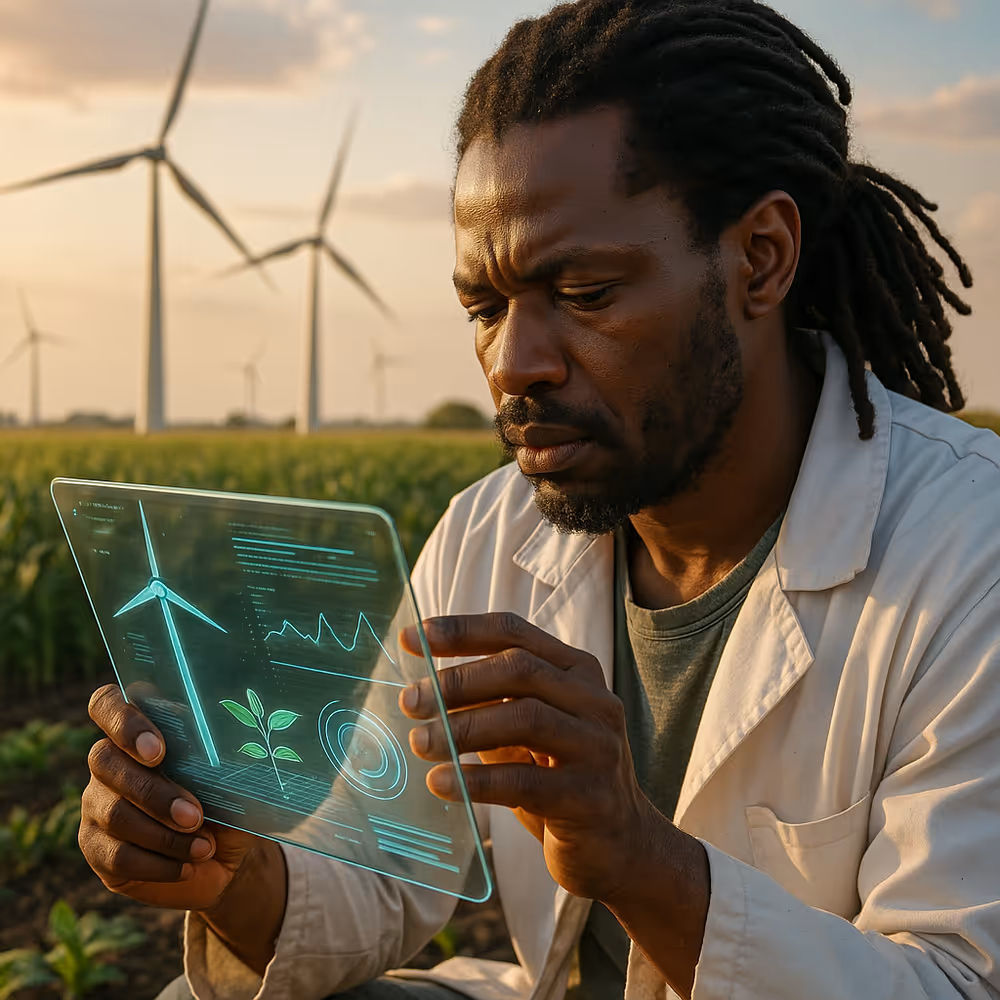
Emerging technologies are powerful allies if directed wisely:
- AI can optimize energy use, predict disease outbreaks, and design regenerative supply chains.
- Biotech can develop drought-resistant crops.
- Satellite systems can monitor illegal logging in real time.
But tech must not become another frontier of extraction.
Without ethics, even AI becomes a pollutant.
🌐 Section 6: Action Agenda—From Global to Personal
🌍 Governments: Enforce carbon pricing, protect biodiversity hotspots, and fund climate adaptation in the Global South.
🏢 Businesses: Stop greenwashing; embed circular economy principles and publish transparent ESG reports.
👫 Communities: Mobilize around local restoration projects, from mangrove planting to urban farms.
🙋 Individuals: Reduce meat and dairy intake, shift to clean transport, and vote with your wallet by supporting ethical brands.
🔔 Conclusion: A Wake-Up Call
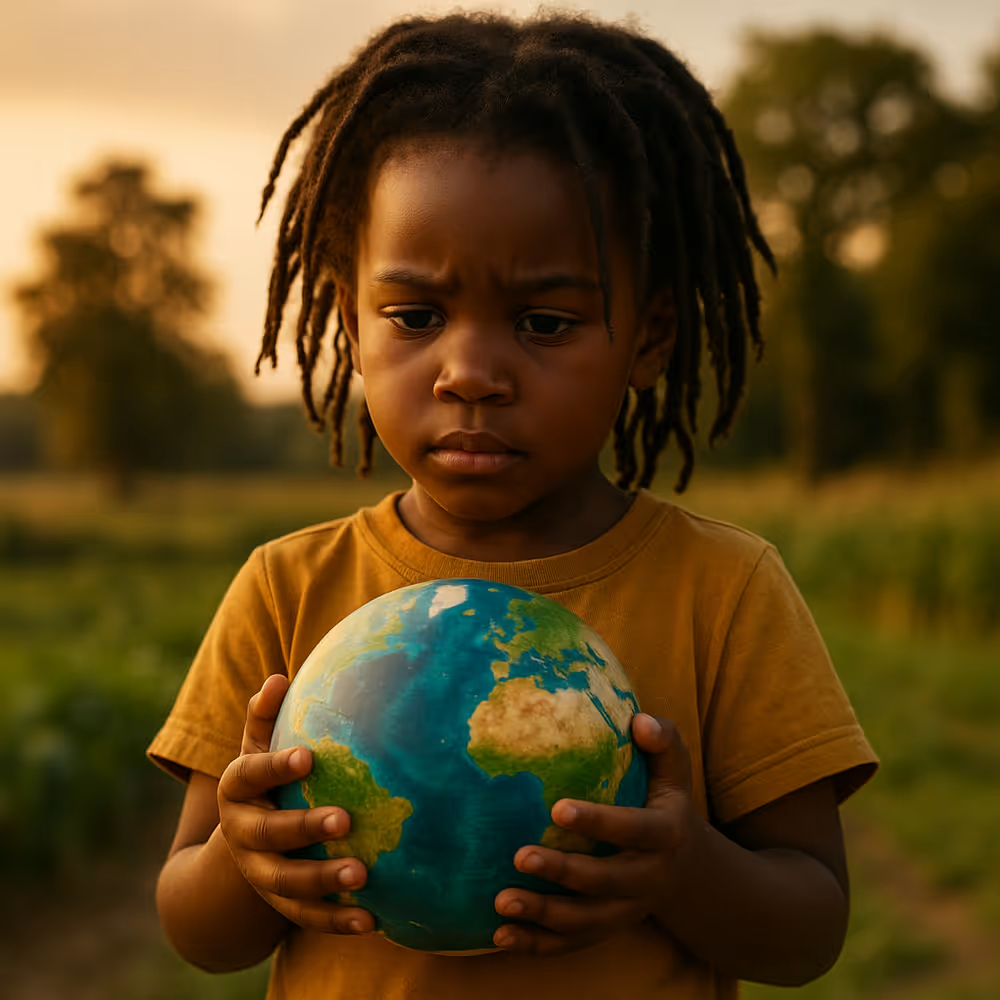
We are the first generation to see the danger so clearly, and perhaps the last with a chance to prevent collapse.
Every ton of CO₂ avoided, every hectare restored, every child educated on sustainability is a thread in the lifeline to our survival.
Planetary health is not “environmentalism.”
It is public health, economic stability, and the continuation of human civilization.
Ignore it, and we may join the dinosaurs in the fossil record.
Prioritize it, and we leave our children a living, breathing world worth inheriting.
0 Comments
Leave a comment