

Human beings have never been more connected.
A person in Mombasa can exchange ideas instantly with someone in Nairobi, São Paulo, Mumbai, or Vancouver. Communities form across continents. Conversations occur continuously. Information moves at extraordinary speed.
Yet many people report a peculiar feeling beneath this unprecedented connectivity:
- Loneliness
- Fragmentation
- Disconnection
The paradox is difficult to ignore.
Technology has dramatically improved communication while often struggling to create belonging.
The reason may be simpler than it first appears.
Connection and belonging are not the same thing.
Communication allows people to exchange information. Belonging emerges when people begin sharing meaning.
And throughout human history, one of the most powerful mechanisms for creating shared meaning has been ritual.
Movements, communities, and cultures rarely endure because people remain permanently connected.
They endure because people repeatedly return to the same practices, stories, and symbols together.
In an increasingly distributed world, this may matter more than ever.
What Are Rituals and Why Do Communities Need Them? 🧠
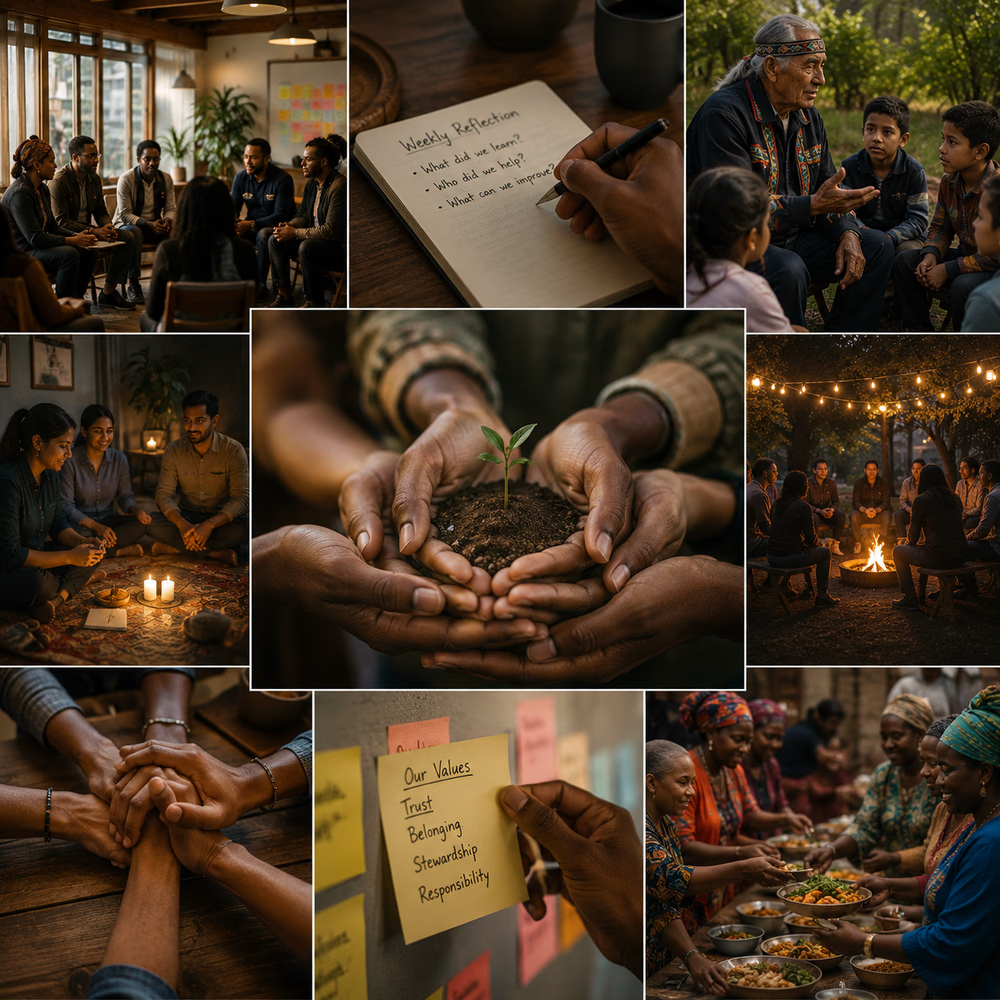
The word ritual often evokes images of religion, ceremony, or tradition.
But rituals are far broader than that.
A ritual is any repeated practice that reinforces shared meaning.
It may be:
- A weekly gathering
- A recurring question
- A storytelling tradition
- An annual event
- A moment of reflection
- Or a simple act repeated consistently within a community
What matters is not complexity.
What matters is repetition.
Rituals transform abstract values into lived experience.
Communities often speak about trust, belonging, stewardship, or responsibility.
Rituals provide opportunities to practice them.
This is why rituals appear across nearly every culture throughout history.
They convert ideas into habits.
And habits into identity.
As explored in Belief Is Built in Repetition, Not Reach, human beings rarely internalize values through isolated exposure.
We internalize them through recurring encounters across time.
Communities remember what they repeatedly practice.
Why Movements Depend on Rituals for Continuity 🔄
Movements depend on continuity.
Without continuity, even compelling ideas struggle to survive.
A movement requires:
- Trust
- Memory
- Identity
- Shared language
- And collective purpose
Information alone cannot sustain these elements.
People may agree intellectually with a cause while remaining disconnected from the community carrying it.
Rituals help bridge this gap.
They create recurring opportunities for participation.
Participation matters because belonging is not something people consume.
It is something they enact.
This distinction is increasingly important in digital environments.
Many online communities excel at distributing information while struggling to create meaningful attachment.
The result is often a form of passive participation:
People observe, react, and occasionally engage without ever developing a durable sense of connection.
Rituals counteract this tendency.
They create patterns of return.
And as discussed in Why Movements Don't Scale—They Spread, movements become durable not when people merely hear a message, but when communities begin carrying that message themselves.
Rituals are one of the mechanisms through which this carrying occurs.
The Challenge of Building Belonging in Distributed Communities 🌍⚠️
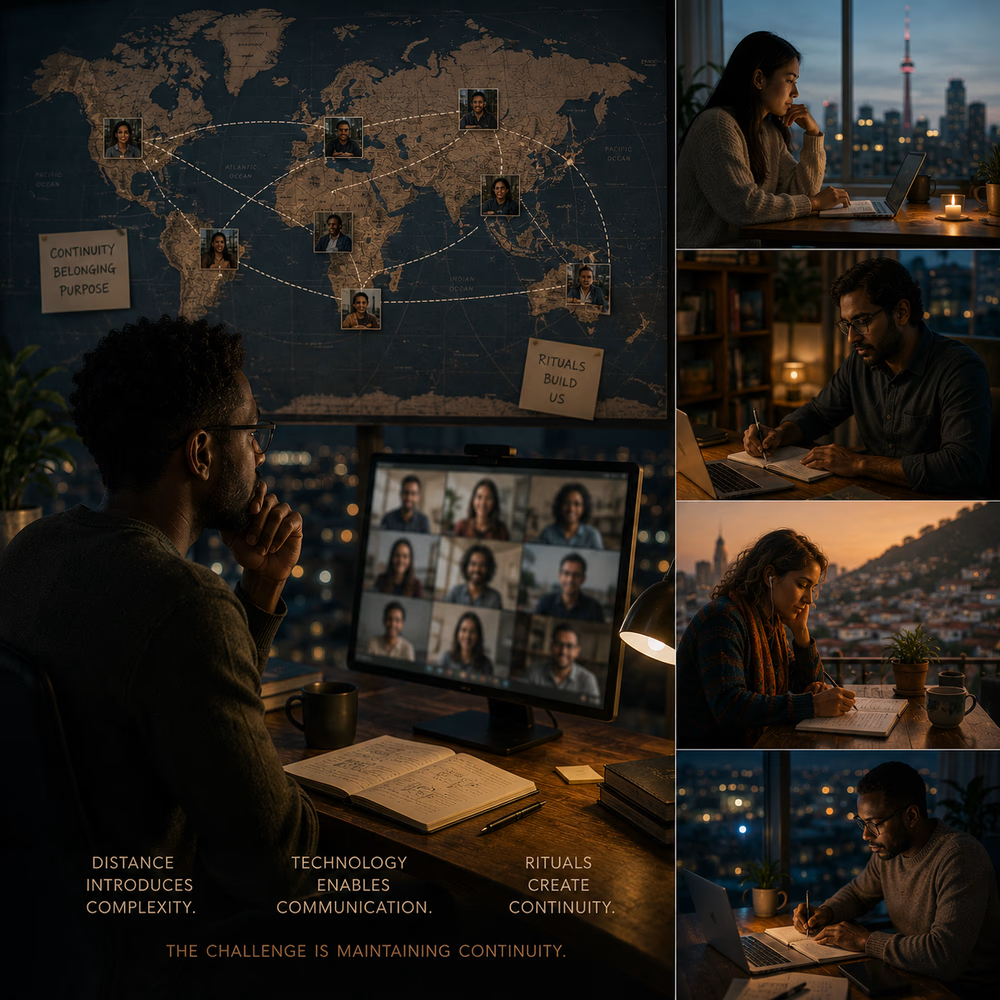
Historically, many communities relied on place.
Shared geography created opportunities for:
- Recurring interaction
- Collective memory
- Cultural transmission
- And mutual accountability
Distributed communities face different conditions.
Members may:
- Live in different countries
- Operate across time zones
- Speak different languages
- Possess different cultural assumptions
- And participate asynchronously
Distance introduces complexity.
The greater the distance between members, the more intentional communities must become about creating cohesion.
Technology solves part of the problem.
It enables communication.
But communication alone rarely creates culture.
Culture emerges through repeated shared experiences.
This is why distributed communities often require stronger rituals than physical communities.
Without intentional practices, distance gradually becomes fragmentation.
The challenge is not maintaining connection.
The challenge is maintaining continuity.
Rituals vs Engagement: What Actually Creates Commitment? 📊
Modern digital platforms are optimized for engagement.
Communities are encouraged to track:
- Views
- Impressions
- Clicks
- Comments
- Shares
- And activity levels
These metrics can be useful.
But they often measure attention rather than attachment.
A person may engage with content frequently while remaining largely disconnected from the community producing it.
An audience consumes.
A community participates.
The distinction matters.
Engagement metrics answer questions such as:
“How many people saw this?”
Rituals answer different questions:
“How many people returned?”
“How many people contributed?”
“How many people felt responsible for carrying this forward?”
This reflects a recurring theme throughout the JBN Canon.
Many institutions become preoccupied with visibility while overlooking continuity.
As explored in Why Movements Don't Scale—They Spread, durable communities are rarely built through audience acquisition alone.
They emerge through repeated participation.
And participation requires practice.
Principles for Designing Healthy Community Rituals 🛠️
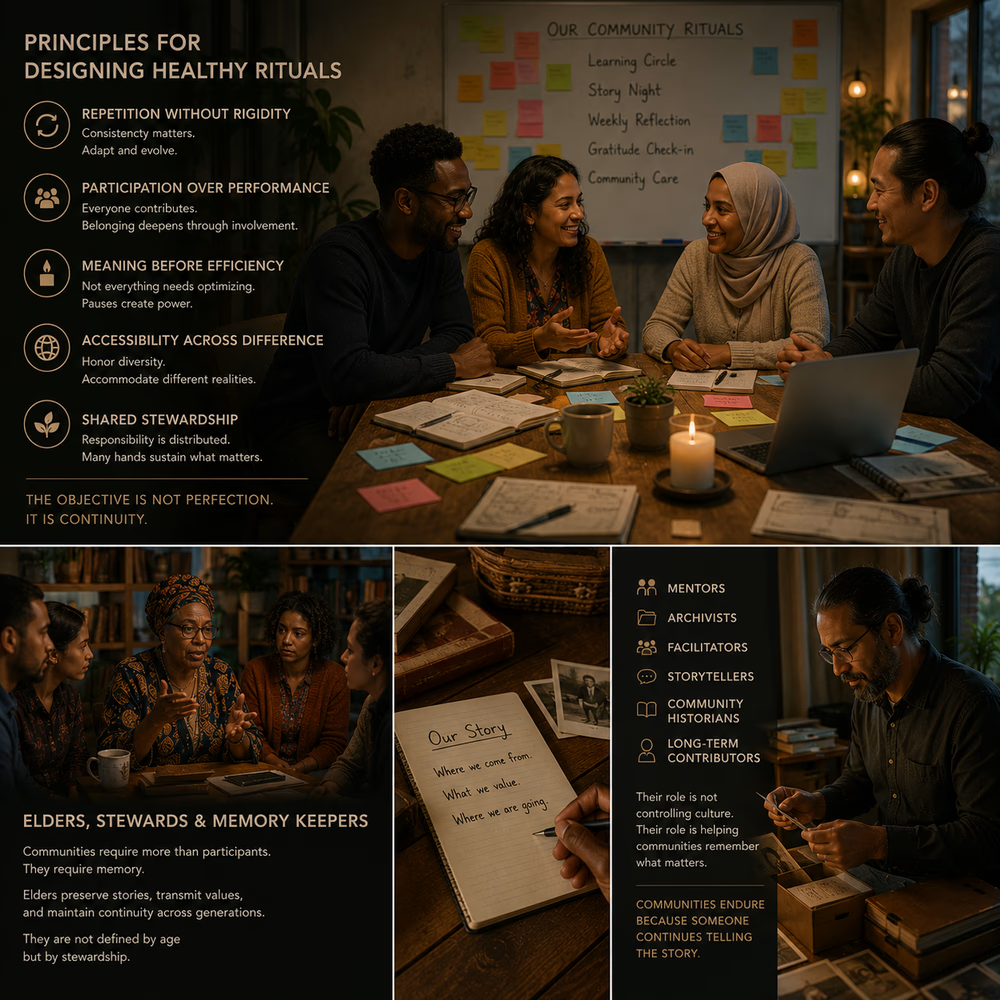
Healthy rituals do not emerge accidentally.
They are often designed thoughtfully and maintained intentionally.
Several principles appear repeatedly across resilient communities.
Repetition Without Rigidity 🔁
Consistency matters.
But healthy rituals remain adaptable enough to evolve alongside changing circumstances.
Participation Before Performance 🤝
Members should have opportunities to contribute, not merely observe.
Belonging deepens through involvement.
Meaning Before Efficiency 🕯️
Not every valuable practice needs optimization.
Some rituals derive their power precisely from creating pauses within otherwise accelerated environments.
Accessibility Across Difference 🌍
Distributed communities contain diverse experiences, schedules, cultures, and capacities.
Healthy rituals accommodate variation rather than demanding uniformity.
Shared Stewardship 🌱
Communities become stronger when responsibility is distributed rather than concentrated exclusively among leaders.
Rituals survive longest when many people help carry them.
The objective is not perfection.
It is continuity.
Elders, Stewards, and the Preservation of Collective Memory 📚
Communities require more than participants.
They require memory.
Throughout history, cultures have relied upon people who preserve stories, transmit values, and maintain continuity across generations.
In Why the Internet Still Needs Elders, I explored the importance of individuals who act as custodians of collective wisdom.
Distributed communities require similar figures.
Not necessarily elders by age.
But elders by stewardship.
These may be:
- Mentors
- Archivists
- Facilitators
- Storytellers
- Community historians
- Or long-term contributors
Their role is not controlling culture.
Their role is helping communities remember what matters.
Because rituals cannot survive without memory.
And memory rarely survives without people willing to protect it.
Communities endure because someone continues telling the story.
Rituals as Anti-Acceleration Infrastructure ⏳
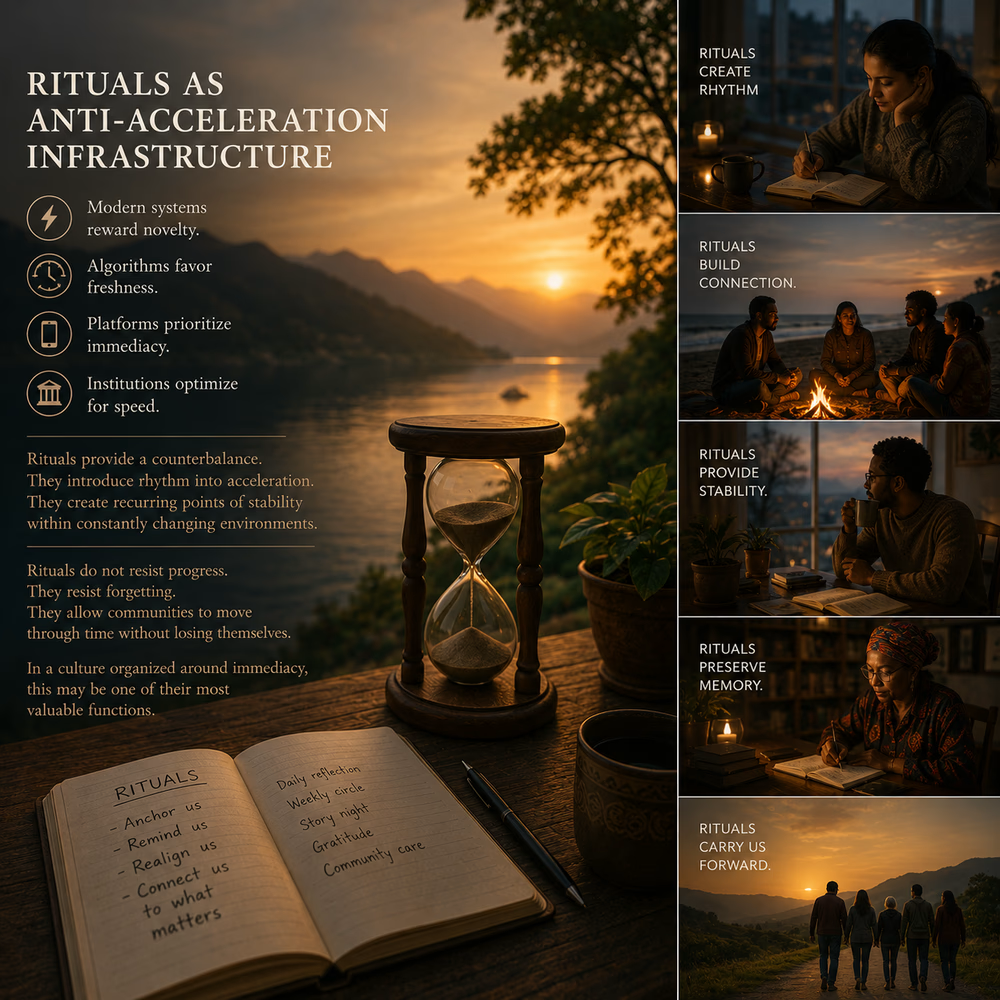
Modern systems reward novelty.
Algorithms favor freshness.
Platforms prioritize immediacy.
Institutions increasingly optimize for speed.
Yet many forms of cultural continuity depend on slower rhythms.
This theme appears repeatedly throughout the JBN Canon.
In The Cost of Speed, acceleration was shown to undermine trust when pursued without restraint.
In Slow Intelligence in Fast Institutions, we explored how wisdom often struggles inside environments optimized for responsiveness.
Rituals provide a counterbalance.
They introduce rhythm into acceleration.
They create recurring points of stability within constantly changing environments.
Importantly, rituals do not resist progress.
They resist forgetting.
They allow communities to move through time without losing themselves.
In a culture increasingly organized around immediacy, this may be one of their most valuable functions.
Closing Reflection: What Communities Carry Forward 🕯️🌌
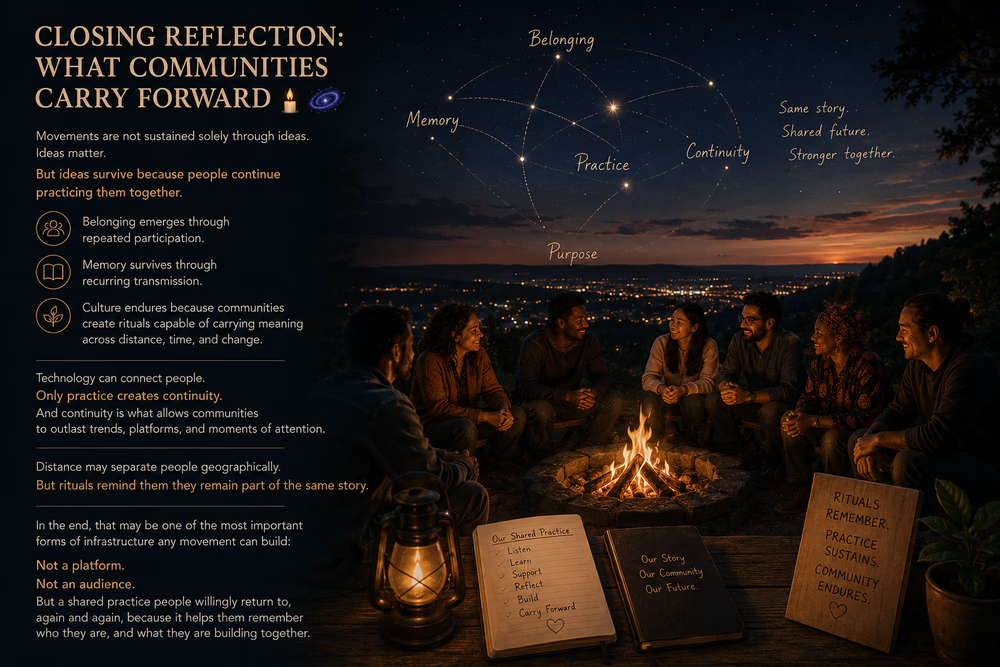
Movements are not sustained solely through ideas.
Ideas matter.
But ideas survive because people continue practicing them together.
Belonging emerges through repeated participation.
Memory survives through recurring transmission.
Culture endures because communities create rituals capable of carrying meaning across distance, time, and change.
Technology can connect people.
Only practice creates continuity.
And continuity is what allows communities to outlast trends, platforms, and moments of attention.
Distance may separate people geographically.
But rituals remind them they remain part of the same story.
In the end, that may be one of the most important forms of infrastructure any movement can build:
Not a platform.
Not an audience.
But a shared practice people willingly return to, again and again, because it helps them remember who they are, and what they are building together.
0 Comments
Leave a comment