
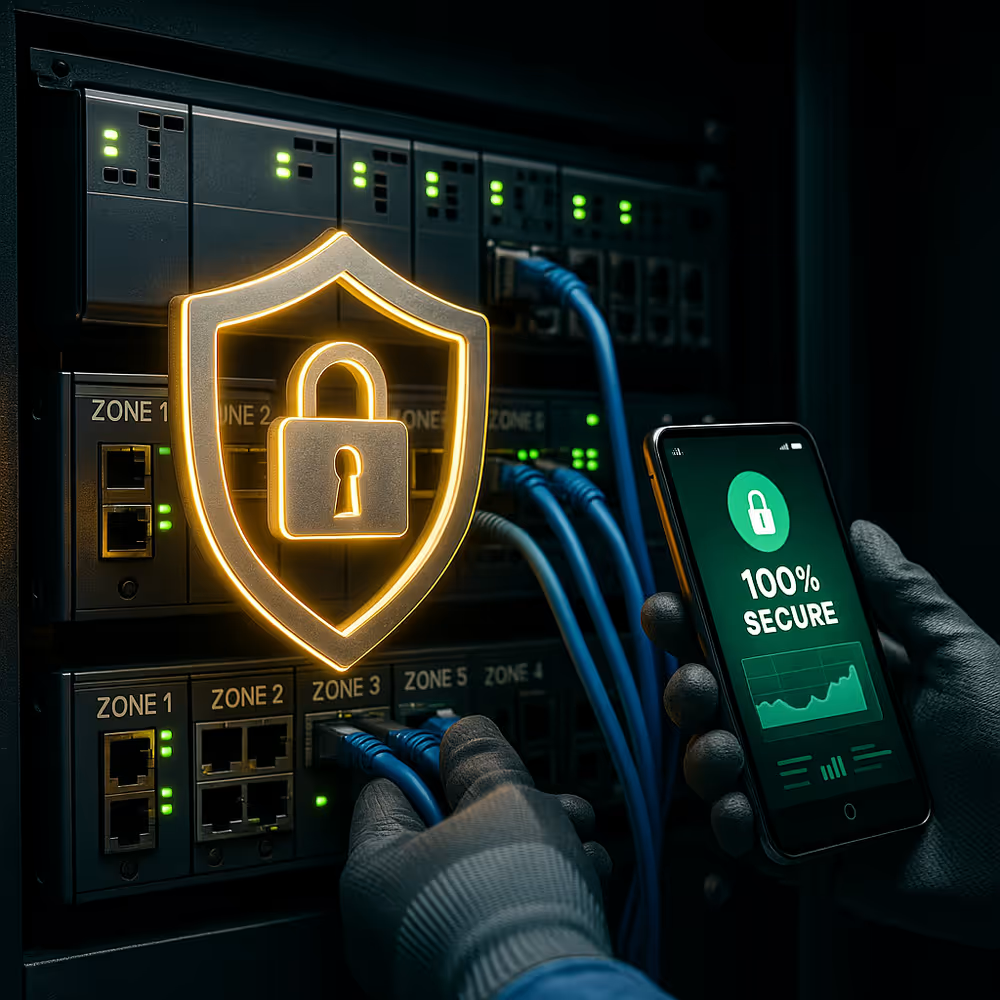
The manufacturing industry is undergoing a radical transformation, embracing digital technologies such as the Internet of Things (IoT), artificial intelligence (AI), machine learning (ML), blockchain, and digital twins to enhance efficiency and sustainability.
However, as manufacturers integrate these innovations, they also expose themselves to an expanding cyber threat landscape.
The rise of smart factories, interconnected supply chains, and automated systems increases the risk of cyberattacks, data breaches, and intellectual property theft.
A single cyberattack can disrupt entire operations, compromise sensitive customer and production data, and cause financial losses amounting to billions of dollars.
This article explores the significance of cybersecurity and data privacy in digital manufacturing, the key vulnerabilities, and strategies to mitigate risks while ensuring compliance with regulatory frameworks.
Why Cybersecurity & Data Privacy Matter in Digital Manufacturing
The digital transformation of manufacturing has introduced a wave of cyber threats, ranging from ransomware attacks to industrial espionage.
Key threats include:
Ransomware Attacks: Hackers encrypt critical production and supply chain data, demanding ransom for decryption.
Data Breaches: Sensitive manufacturing data, including trade secrets, customer information, and supply chain details, are at risk of being exposed.
Industrial Espionage: Competitors and malicious actors may target intellectual property, disrupting competitive advantage.
Operational Disruptions: Cyberattacks on IoT-enabled manufacturing systems can shut down entire production lines.
Supply Chain Vulnerabilities: Interconnected systems mean that an attack on one supplier can compromise the entire ecosystem.
The Stakes: What’s at Risk?
A successful cyberattack can lead to:
- ✅ Production Downtime – Delays in manufacturing timelines, resulting in massive financial losses.
- ✅ Intellectual Property Theft – Stolen trade secrets, blueprints, and proprietary technologies.
- ✅ Regulatory Fines – Non-compliance with global data privacy regulations such as GDPR, CCPA, and ISO 27001.
- ✅ Loss of Consumer Trust – Customers and partners may lose faith in the brand’s ability to safeguard data.
Key Cybersecurity Vulnerabilities in Digital Manufacturing
IoT, OT & Smart Factory Risks
IoT-connected devices in manufacturing facilities increase the attack surface, making them susceptible to cyberattacks.
Many legacy systems are not designed with cybersecurity in mind, making them vulnerable entry points.
Cloud & Edge Computing Exposures
While cloud-based storage enhances efficiency, it also exposes sensitive data to cyber risks if not properly encrypted.
Edge computing, which processes data closer to the source, introduces additional vulnerabilities due to decentralized access points.
Supply Chain Weaknesses
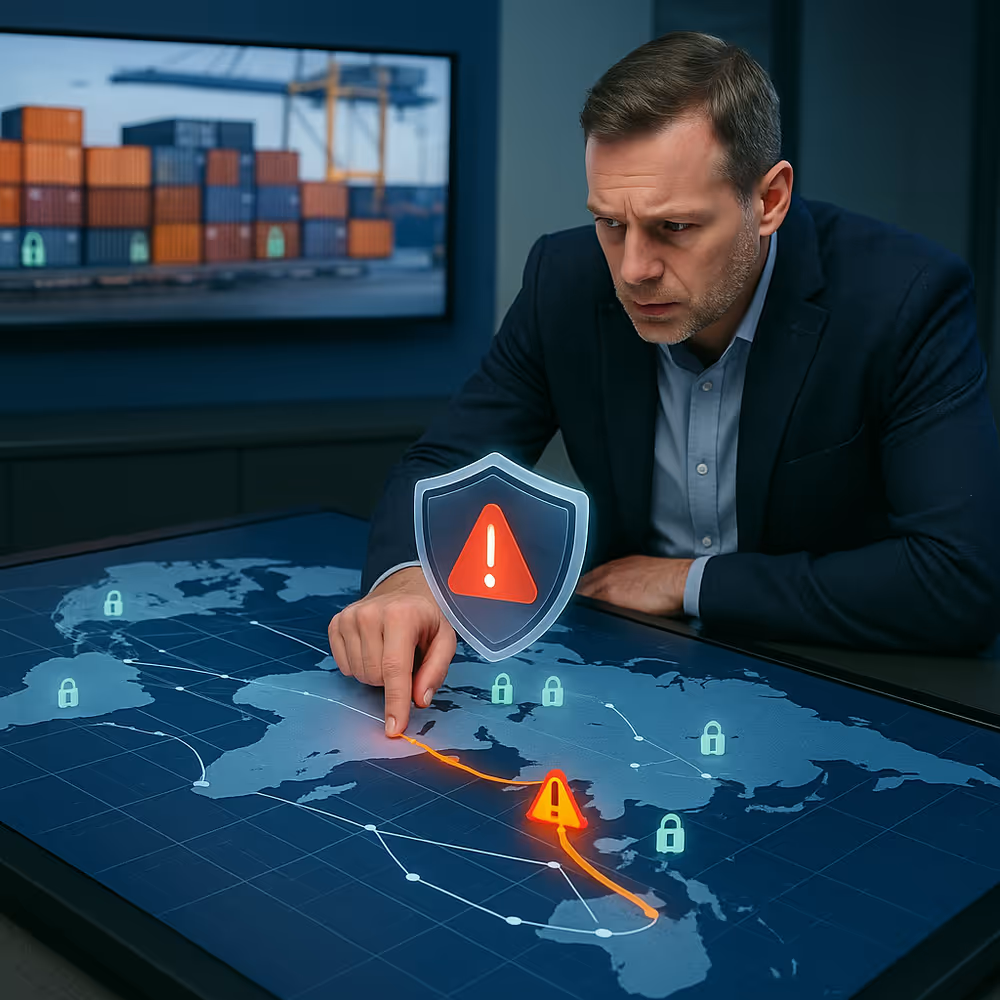
A single weak link in the supply chain—such as an unsecured supplier system—can expose an entire network to cyber threats.
Third-party vendors with inadequate security protocols may serve as backdoors for cybercriminals.
AI/ML Manipulation & Data Poisoning
AI-driven predictive maintenance and quality control are increasingly used, but adversarial attacks can manipulate ML models to disrupt operations.
Data poisoning—where attackers introduce malicious data into AI systems—can degrade decision-making accuracy.
Human Risk: Phishing, Social Engineering & Insider Threats
Phishing and social engineering attacks remain some of the most effective ways for hackers to breach manufacturing networks.
Insider threats—whether accidental or malicious—account for a significant portion of cybersecurity incidents.
Lessons from the Past: High-Profile Cyberattacks in Manufacturing
The manufacturing industry is a prime target for cybercriminals due to its high reliance on automation, supply chain interconnectivity, and proprietary technologies.
Below are some major cyberattacks that crippled global manufacturers, leading to financial ruin, reputational damage, and operational standstills.
The NotPetya Attack (2017) – Maersk & Mondelez
💀 How the Attack Happened:
The NotPetya malware attack originated in Ukraine but rapidly spread across the globe. Initially disguised as a software update, it infected systems and encrypted critical data, rendering entire IT networks inoperable. Unlike ransomware, NotPetya had no decryption key, meaning there was no way to recover locked files.
📉 The Financial & Operational Damage:
Maersk, the world’s largest shipping company, suffered $350 million in damages. The virus wiped out its global IT infrastructure, forcing employees to use pen and paper for weeks.
Mondelez International (makers of Cadbury, Oreo, and Ritz) also lost $188 million due to disrupted production and halted logistics.
🛠️ The Lessons Learned:
- ✅ Regularly update cybersecurity defenses and patch software vulnerabilities promptly.
- ✅ Implement network segmentation to prevent malware from spreading across critical systems.
- ✅ Backup essential data offline to ensure recovery in case of widespread encryption attacks.
The Honda Ransomware Attack (2020)

💀 How the Attack Happened:
Honda’s global operations were crippled by a Snake ransomware attack, which targeted its IT and operational technology (OT) networks. The attack encrypted files and demanded ransom for decryption.
📉 The Financial & Operational Damage:
Honda had to halt production at several manufacturing plants, delaying vehicle shipments globally.
The attack disrupted customer service operations and compromised sensitive employee data.
🛠️ The Lessons Learned:
- ✅ Air-gap critical OT networks from IT systems to prevent crossover cyber threats.
- ✅ Adopt multi-factor authentication (MFA) to prevent unauthorized access to enterprise systems.
- ✅ Conduct regular penetration testing to identify security loopholes before hackers do.
The JBS Ransomware Attack (2021)
💀 How the Attack Happened:
JBS, the world’s largest meat supplier, fell victim to a ransomware attack by the REvil hacking group. The attackers encrypted critical files and demanded an $11 million ransom in Bitcoin to restore operations.
📉 The Financial & Operational Damage:
JBS was forced to shut down meat processing plants in the U.S., Canada, and Australia, causing major supply chain disruptions.
The attack led to millions of dollars in losses, panic buying, and temporary meat shortages.
StabJBS paid the ransom to regain control over its systems.
🛠️ The Lessons Learned:
- ✅ Never rely solely on reactive cybersecurity—implement real-time threat detection to stop attacks before they escalate.
- ✅ Invest in cyber resilience training for employees to recognize phishing and social engineering scams.
- ✅ Establish a cybersecurity incident response plan to minimize downtime in case of future attacks.
The Colonial Pipeline Ransomware Attack (2021)
💀 How the Attack Happened:
The DarkSide ransomware group infiltrated Colonial Pipeline, the largest fuel pipeline in the U.S., via a compromised employee password. The attackers encrypted 5,500 miles of pipeline infrastructure, forcing shutdowns that led to fuel shortages and panic buying across the East Coast.
📉 The Financial & Operational Damage:
The company paid $4.4 million in Bitcoin ransom to regain access.
Gas prices skyrocketed, affecting millions of consumers and businesses.
U.S. government agencies had to intervene to mitigate supply chain damage.
🛠️ The Lessons Learned:
- ✅ Zero-Trust Security should be the default, requiring strict verification for every login attempt.
- ✅ Employee credentials should be rotated and protected with multi-factor authentication (MFA).
- ✅ Cybersecurity is a national security issue—companies must report attacks immediately to authorities.
Strategies for Enhancing Cybersecurity & Data Privacy
Build a Cyber-Resilient Architecture (Zero Trust, Segmentation, Encryption)
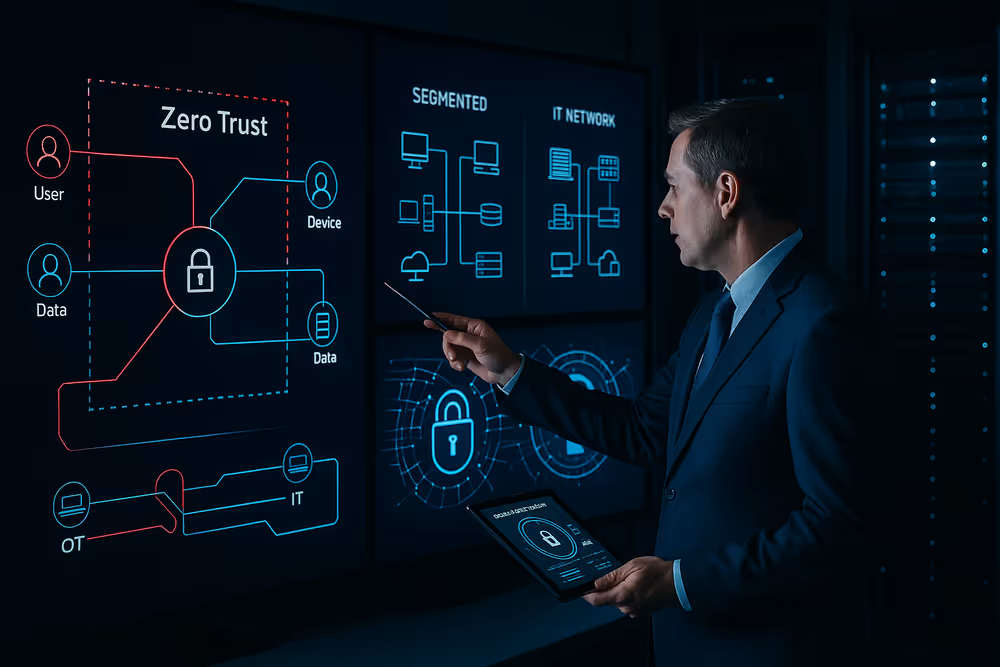
- ✅ Zero-Trust Architecture: No entity inside or outside the network is automatically trusted.
- ✅ Segmentation of OT & IT Networks: Operational technology (OT) should be isolated from information technology (IT) systems.
- ✅ End-to-End Encryption: Encrypt data both in transit and at rest to prevent unauthorized access.
AI-Driven Detection & Automated Response
- AI-powered threat detection can analyze network behavior in real-time, identifying anomalies before they escalate.
- Automated incident response systems can swiftly neutralize threats, reducing human error in cybersecurity protocols.
Secure Supply Chain Management (Audits, Blockchain, Insurance)
- Implement Blockchain for Supply Chain Security, ensuring transparency and immutability of transactions.
- Conduct third-party cybersecurity audits to verify that suppliers and vendors meet security standards.
- Require cybersecurity insurance as part of supply chain contracts.
Workforce Security Training & Culture
- Conduct regular phishing simulations to prepare employees for cyber threats.
- Implement strict access controls with role-based permissions, ensuring that employees can only access the data necessary for their jobs.
- Establish a whistleblower system to report suspicious cyber activities internally.
Compliance: GDPR, CCPA, ISO 27001, NIST CSF
Manufacturers must comply with regional and international regulations to avoid legal repercussions.
These include:
- GDPR (General Data Protection Regulation, EU) – Governs data protection for companies operating in or handling EU citizen data.
- CCPA (California Consumer Privacy Act, US) – Protects personal data of California residents.
- ISO 27001 – International standard for information security management systems.
- NIST Cybersecurity Framework (US) – A voluntary framework outlining best practices for cyber resilience.
Case Studies: Manufacturing Leaders Getting Security Right
Siemens: Leading in Industrial Cybersecurity
Siemens has developed advanced Industrial Security Services, integrating AI-powered cybersecurity into its manufacturing operations.
The company’s Cybersecurity Operation Centers (CSOCs) monitor industrial networks globally to detect and respond to threats in real time.
Tesla: Securing Smart Manufacturing
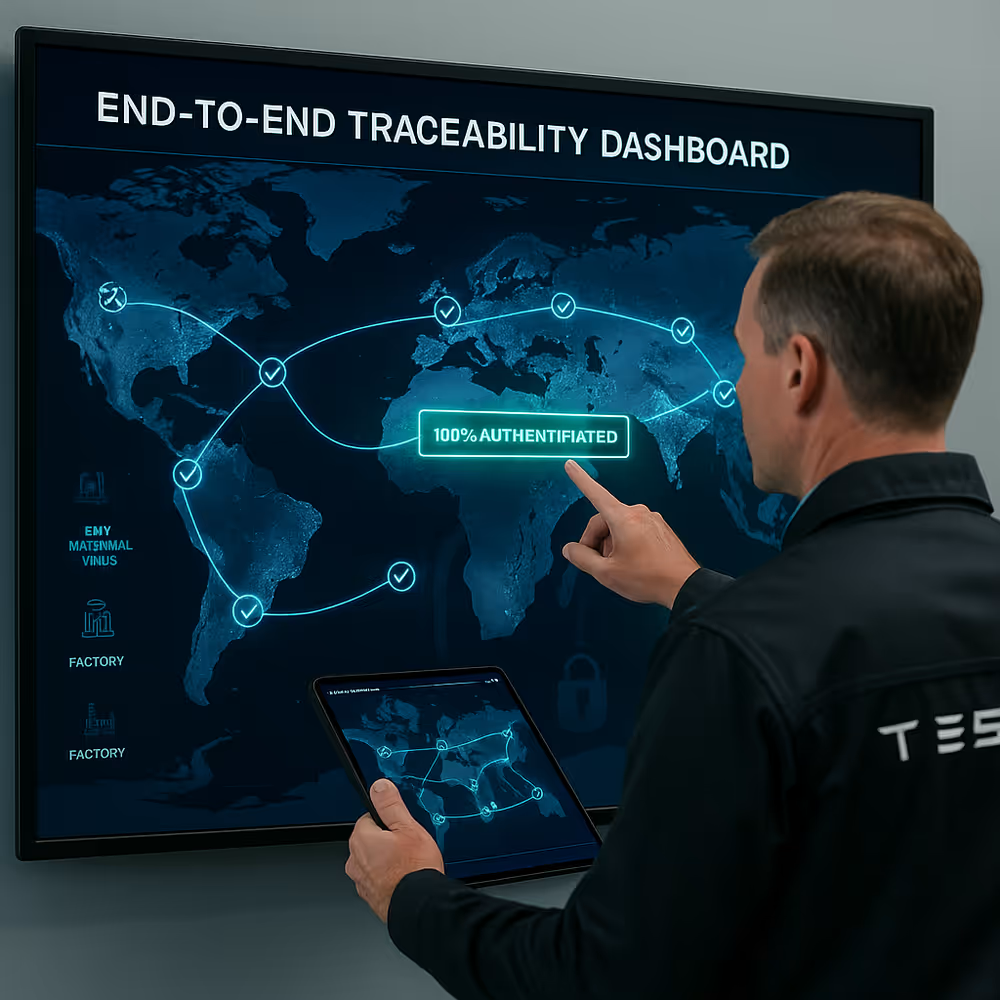
Tesla employs blockchain-based supply chain management to ensure that all components used in manufacturing are authenticated and secure.
The company also leverages AI-driven anomaly detection to protect its autonomous manufacturing processes from cyber threats.
BASF: Implementing Zero-Trust in Chemical Manufacturing
BASF, a global chemical manufacturing giant, has integrated Zero-Trust Security Architecture to limit access to sensitive data and systems.
By adopting multi-factor authentication (MFA) and network segmentation, it has significantly reduced cybersecurity risks.
Foxconn: Strengthening IoT Security
Foxconn, a key supplier for consumer electronics, has implemented IoT cybersecurity protocols, ensuring that every smart factory device is regularly patched and updated to prevent unauthorized access.
Conclusion: Cybersecurity is No Longer Optional
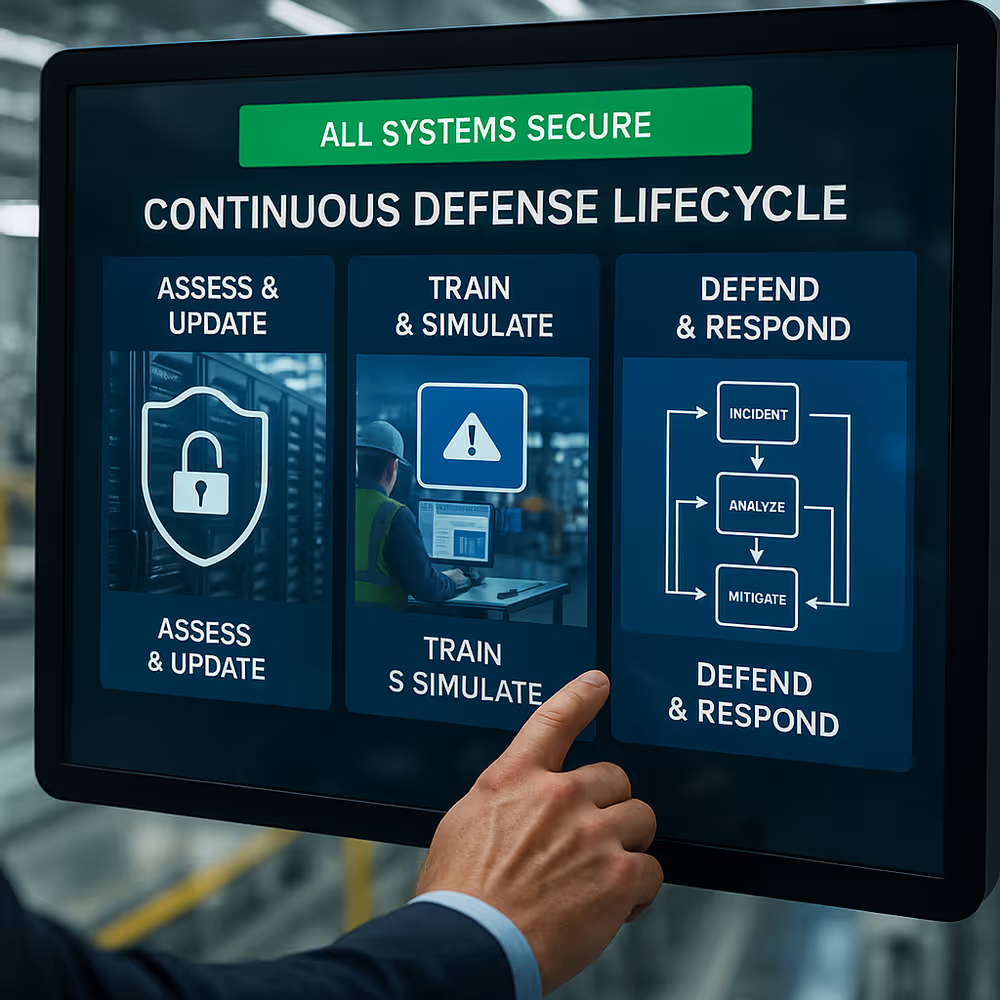
As manufacturers increasingly integrate digital technologies into their production processes, cybersecurity must be a top priority.
Protecting sensitive data, intellectual property, and supply chains from cyber threats will be essential for long-term resilience.
Investing in robust cybersecurity measures, employee training, and next-generation cyber defenses will not only protect companies from devastating attacks but also position them as leaders in secure and sustainable manufacturing.
Manufacturers must adopt a security-first mindset, continuously update their cybersecurity measures, and collaborate with industry leaders to share best practices and threat intelligence.
The manufacturing sector's digital transformation is unstoppable—but its success depends on the strength of its cybersecurity defenses.
And that, for me, is the most important lesson of all.
Call to Action: Secure Your Future Today!
- 🔹 Manufacturers, are you prepared for the cybersecurity challenges of Industry 4.0?
- 🔹 Assess your cybersecurity framework today and ensure your smart factories, IoT systems, and supply chains are resilient.
- 🔹 Engage with cybersecurity experts, invest in AI-driven security solutions, and stay ahead of emerging threats.
- 🔹 Let’s build a future where digital innovation and cybersecurity go hand in hand!
0 Comments
Leave a comment